Milan history in the Roman Empire
Milan history as an imperial residence began under Maximian in 286 CE. The court moved to Ravenna in 402 CE. Those dates give a starting point for understanding why the story of the city reaches much further back than the buildings that dominate its central squares today.
Roman Milan is one part of a city with several building histories. It helps to pick a theme before planning a walk. For fortifications and later restoration, use the Castello as your anchor. For paintings, reserve a visit to the refectory or make Brera the focus. The Milan sights guide helps put those stops on a day plan.

Art and Milanese history
Explore the Scala museum, choose a private old-town route, or visit the Last Supper with an art historian.
Hand-picked tours, booked through Viator and GetYourGuide. Prices are indicative starting prices in euros (as of November 2026). Tap a tour for live availability and the current price in your currency.

Private old town walk and San Satiro
- Private Walking Tour of Milan’s Old Town Highlights (number of attractions depends on the selected option)
- Free admission to the Chiesa di Santa Maria presso San Satiro (all options)
The base option is listed as two hours. Castle courtyards are included in the 3-, 4- and 6-hour options, and castle museums in the 4- and 6-hour options.
Check availability →
Last Supper with an art historian
- Professional art historian guide
- Last Supper entry ticket
The experience lasts three hours; headsets are provided for more than six participants. Arrive 15 minutes early.
Check availability →
La Scala museum with a licensed guide
- Small group tour
- Licensed tour guide
- Entrance tickets
The 90-minute museum visit provides headphones from 11 participants. A view into the auditorium depends on theatre operations; no performance ticket is included.
Check availability →Guided visits through Milan's history
Choose an art historian for the Last Supper, a private Old Town walk for San Satiro and selected castle visits, or a museum guide for La Scala.
Architecture and archaeology around the Old Town
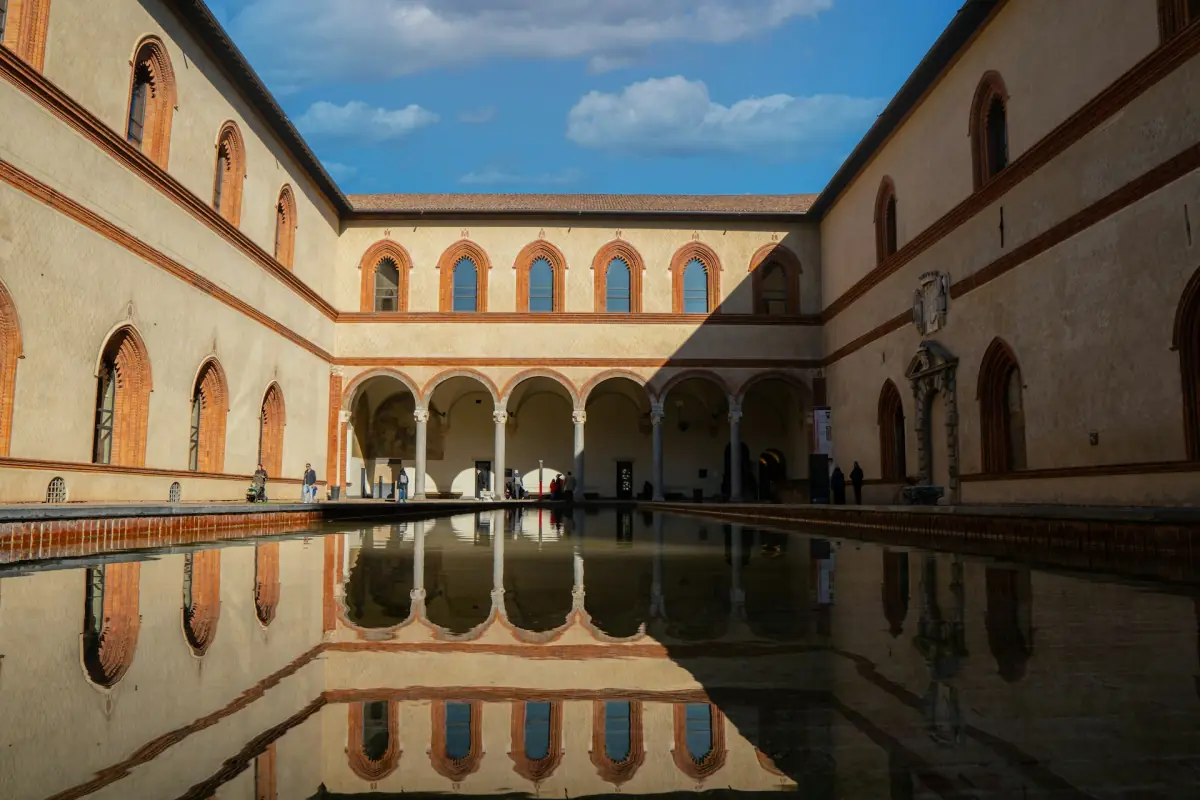
Castello Sforzesco brings several periods of Milan's building history together. Francesco Sforza built the castle in the 15th century on a 14th-century fortification, and Luca Beltrami restored it between 1890 and 1905. The castle courtyards are free to enter. A visit to the courtyards makes a good starting point for thinking about what was inherited, what was rebuilt and how the complex is used as a museum today.
Construction of Milan Cathedral began in 1386. To explore an earlier layer of that site, choose a cathedral ticket that includes the archaeological area. The Milan Cathedral rooftop terraces are a separate point of interest to factor into a visit. Keep the Galleria Vittorio Emanuele II as an architectural stop between the cathedral and Piazza della Scala.
San Satiro is included in every option of the private Old Town walk from Piazza Cordusio 4. The base walk lasts 2 hours. The 3-, 4- and 6-hour options include the castle courtyards, and the 4- and 6-hour options include museum tickets with priority entry. For the starts and inclusions of other private walks, see the Milan private tours guide.
Renaissance art at the Cenacolo, Castello and Brera
Leonardo's Last Supper is a visit to the refectory at Santa Maria delle Grazie. Everyone needs a reservation, and the time in the refectory is 15 minutes. The 3-hour tour with an art historian includes the Last Supper ticket and provides headsets for groups of more than 6 people. See the Last Supper ticket guide for the museum visit and ticket collection.
Castello Sforzesco connects Renaissance history to the Sforza rebuilding, while the Pinacoteca di Brera is a choice for a longer look at paintings. Brera requires a reservation too. If visiting both Brera and the Cenacolo in a day, arrange the timed visits first and fit the castle courtyards around them.
The Navigli canals and Milan's theatre culture
The Navigli show how Milan used water for transport and irrigation, including the movement of marble for the cathedral. The Navigli canal walk links Naviglio Grande, the Darsena basin renewed for Expo 2015 and Naviglio Pavese.
La Scala has a 90-minute small group visit with a licensed guide and museum admission. Headphones are provided from 11 participants. A view into the auditorium depends on rehearsals, performances and events, and the museum visit is separate from admission to a performance.
Choose the art historian tour for Leonardo and the refectory, or the Scala museum visit for theatre history and a possible look into the auditorium.
Questions about Milan history visits
When did Milan become an imperial residence?
286 CE marks the beginning of Milan's role as an imperial residence under Maximian. The court moved to Ravenna in 402 CE. Those are the dates to start with when tracing Roman rule in Milan alongside the later history of the cathedral and the Sforza castle.
Which private walk options enter the castle museums?
The 4- and 6-hour Old Town options include priority entry tickets to the Castello Sforzesco museums. The 3-hour option includes the courtyards, while San Satiro is part of every option. Choose one of the museum options if time inside the castle is central to the visit.
How long does the La Scala museum tour last?
90 minutes are set aside for the small group visit to the La Scala museum. The guided visit includes museum admission. The view into the theatre depends on what is happening in the auditorium, so plan around the museum itself and treat the view as an extra.